TECH BLOG [4] Brakes – Control when it matters on every ride
Whether you're tackling an Alpine pass, riding gravel roads, or commuting to work every day, few components influence your control over a bicycle as directly as the brakes. Modern hydraulic disc brakes deliver powerful braking performance, work reliably in wet and muddy conditions, and require little maintenance in everyday use. At the same time, few other components raise as many questions.
How does a hydraulic brake work? Why does the bite point remain virtually constant over thousands of kilometres? And what really matters on long descents or when riding with a heavily loaded bike?
In this Tech Blog, we explain the technology behind modern disc brakes in a clear, practical way, focusing on what really matters out on the road.

Why modern touring bikes rely on disc brakes
If you don’t deal with the technical details of cycling on a daily basis, the subject of wheel building can quickly seem complicated. That’s why it’s worth taking a quick look behind the scenes of our production process: we don’t just make sure everything is ‘strong enough’, we examine every detail closely – from the correct spoke tension to the quality and stability of the rims. The result is a wheel you can rely on just as much in everyday use as on longer tours.
The wheel is one of the most heavily loaded components on a bicycle. It must absorb radial and lateral forces, transmit torsion from the drive and braking torque, absorb shocks and vibrations, and withstand continuous loads over many years. Particularly for touring bikes, bikepacking setups or expedition machines with total weights exceeding 140 kg, standard wheels are often not optimally designed.
That is why we build our own wheels, tailoring them precisely to the frame, intended use and the wishes of our customers. In this way, we ensure that every wheel reliably fulfils its purpose for many years to come.
Why the brake pressure point remains consistent
A hydraulic disc brake should deliver the same bite point and braking feel even after thousands of kilometres. This is made possible by a system that automatically compensates for brake pad wear.
When you pull the brake lever, a piston moves inside the master cylinder. In doing so, it first closes the so-called compensation port – a small passage connecting the high-pressure chamber to the reservoir. Only once this connection is closed can pressure build up in the hydraulic system and be transmitted through the brake hose to the caliper.
There, the brake pistons press the brake pads evenly against the brake rotor. When you release the brake lever, the pistons retract only slightly. This leaves a very small clearance between the brake pads and the rotor – large enough to allow the rotor to spin freely, yet small enough to ensure a short lever travel before the next braking action.
With every braking action, the brake pads wear down slightly. Over time, the brake pistons in the caliper must therefore extend a little further to maintain the same clearance to the rotor. At the same time, this increases the volume within the hydraulic system.
This is exactly where the reservoir comes into play. As long as the brake lever is not being pulled, the pressure chamber remains connected to the reservoir via the compensation port. This allows hydraulic fluid to flow in as needed to accommodate the increased system volume.
During the next braking action, the piston closes the compensation port again and builds up braking pressure as usual. As a rider, you notice just one thing: despite increasing pad wear, the bite point remains virtually unchanged, and there is no need to manually readjust the brake.
This principle of automatic pad adjustment is one of the key advantages of hydraulic disc brakes. It ensures consistent braking feel, reduces maintenance requirements and makes the brake particularly reliable, especially on long-distance rides.
Where the heat stays
Every time you brake, kinetic energy is converted into heat. The higher the speed and the heavier the bicycle, the more energy the braking system must absorb and dissipate into the surrounding environment.
The brake rotor plays a key role in this process. It is not only the friction surface for the brake pads, but also the primary heat sink of the entire braking system. During braking, it absorbs a large proportion of the heat generated and subsequently releases it into the surrounding air through airflow while riding.
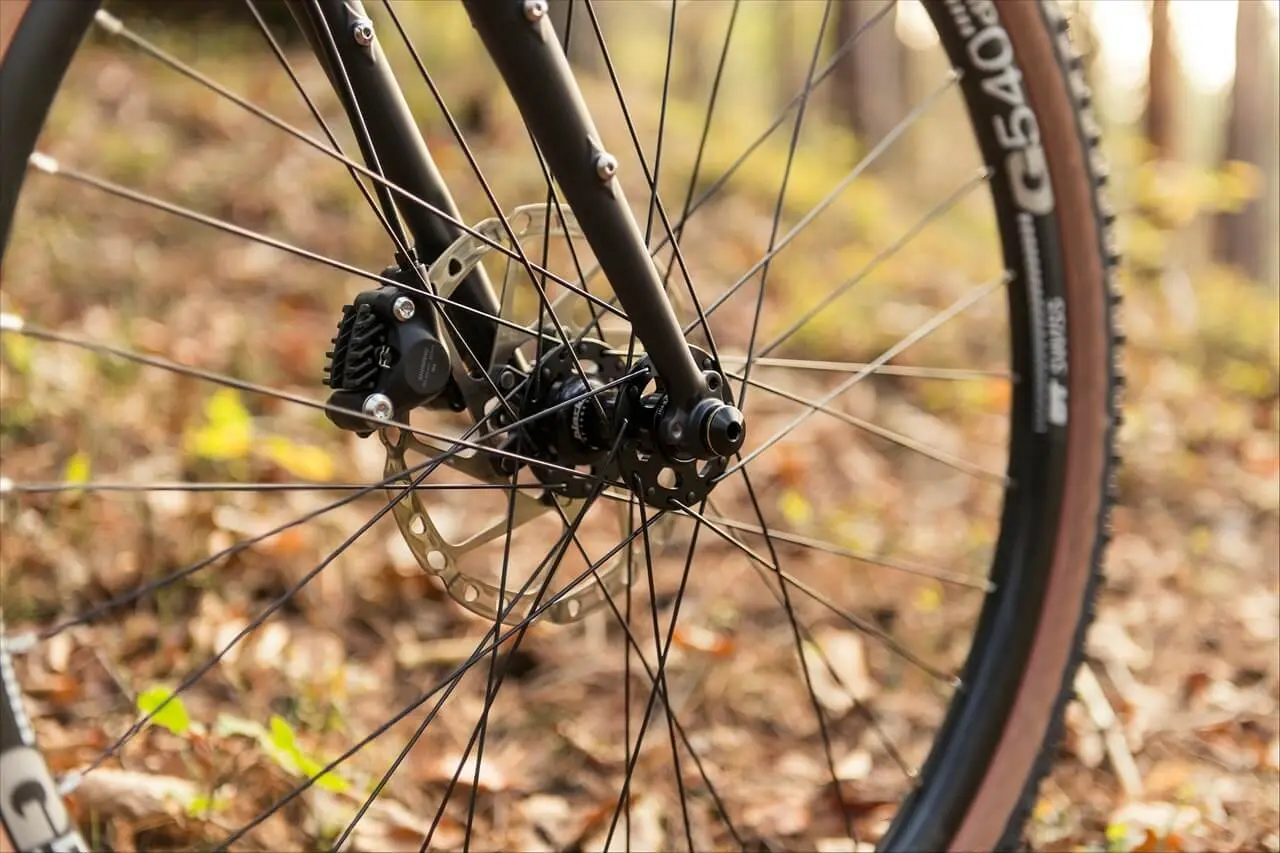
This thermal management is particularly important on fully loaded adventure bikes. On long mountain descents, the braking system must handle large amounts of energy continuously over many minutes. If the heat generated cannot be dissipated quickly enough, the temperatures of the brake rotor, brake pads and caliper will continue to rise. This is why touring bikes often use larger brake rotors. They contain more material and can therefore absorb more heat before critical temperatures are reached. At the same time, their larger surface area allows them to dissipate the stored heat into the surrounding air more quickly.
A larger brake rotor offers another advantage: its greater radius increases braking torque. This means less braking force is required at the caliper to achieve the same deceleration. This improves braking modulation while also reducing the thermal load on the braking system.
Choosing the right brake rotor size therefore depends on more than just the rider's weight. Luggage load, intended use and long descents also play an important role. Especially on adventure bikes, a properly sized brake rotor helps maintain consistent braking performance, even under heavy loads.
However, reliable braking performance does not depend on the brake rotor alone. It is the interaction with the brake pads that ultimately determines how braking force is transferred to the road or trail.
The interplay between the rotor and the brake pad
The brake rotor absorbs the heat generated during braking – but the brake pads do the actual braking. It is only through the interaction of these two components that a brake system achieves its braking power, quiet operation and precise modulation.
With every braking action, a thin layer of the brake pad material wears away. This wear is inherent to the design and perfectly normal. Brake pads are typical wear components in a braking system and are designed to be replaced much more easily and cost-effectively than the brake rotor.
How quickly brake pads wear down depends on many factors. In addition to mileage, weather conditions, terrain, riding style and total system weight all influence wear. Rain, dirt, long descents or frequent braking with heavy luggage can significantly shorten their service life.
Why new brake pads need to be bedded in
New brake pads do not deliver their full braking performance immediately after installation. The brake disc and brake pads first need to bed in together.
During the bedding-in process, an even friction layer forms on the surface of the brake disc – the so-called transfer film. This thin layer is essential for ensuring that the brake pads and brake disc work together optimally. The result is consistent braking performance, a stable friction coefficient and a brake that is easy to modulate.
To ensure that this transfer film builds up evenly, the braking system should be gradually brought up to operating temperature. The exact procedure varies depending on the manufacturer. Therefore, always follow the specific bedding-in instructions provided by the manufacturer.
What happens if you don't bed in the brakes properly?
If new brake pads are subjected to heavy braking straight away or are not bedded in properly, there is a risk of an uneven friction layer forming. This can result in reduced braking performance, noise, or an inconsistent braking feel.
Repeated overheating of brake pads – for example, due to continuous dragging of the brakes on long descents – can cause the pad surface to glaze. This reduces the coefficient of friction, meaning the brakes deliver less stopping power despite the same lever force.
Properly bedded-in brake pads and an anticipatory riding style are therefore essential to ensuring that the braking system can consistently deliver its full performance over time.
When braking, weight shifts forward, placing more load on the front wheel and allowing it to transmit significantly greater braking forces. At the same time, the rear wheel becomes unloaded and reaches its traction limit sooner.
This is why the front brake provides most of the deceleration. The rear brake helps stabilize the bike and supports the braking process. For controlled braking, both brakes should always be used together. How much braking force can be applied to the front and rear wheels depends on the surface, speed, and load carried by the bike.
More weight means more energy.
A fully loaded adventure bike places greater demands on the braking system than an unloaded bicycle. As the overall weight increases, so does the kinetic energy that must be completely converted into heat every time you brake.
This not only means longer braking distances, but also greater thermal stress on the brake rotors and pads. Riding proactively and anticipating changes in speed and terrain can help reduce the load on the braking system and maintain its performance, even on long descents.
Long descents
Especially on long descents, riding technique determines how much heat builds up in the braking system.
If the brake levers are kept slightly pulled for an extended period, heat is generated continuously. The brake rotor and brake pads have little opportunity to cool down, causing the temperature of the entire braking system to steadily increase.
Controlled braking followed by periods of coasting is more effective. During these phases, the brake rotor can dissipate some of the stored heat into the surrounding air. This reduces thermal stress and helps keep braking performance as consistent as possible, even on long descents.
If you stop after a long descent, you should avoid keeping the brake levers pulled continuously. The hot brake rotor remains in contact with the brake pads and continues to transfer heat to the brake caliper. This unnecessarily exposes the brake pistons, seals, and hydraulic fluid to thermal stress.
Anticipatory braking not only reduces the strain on the braking system, but above all provides one thing: control – whether you are riding on an Alpine mountain pass or a remote gravel track.
Low maintenance – when you know what to look out for
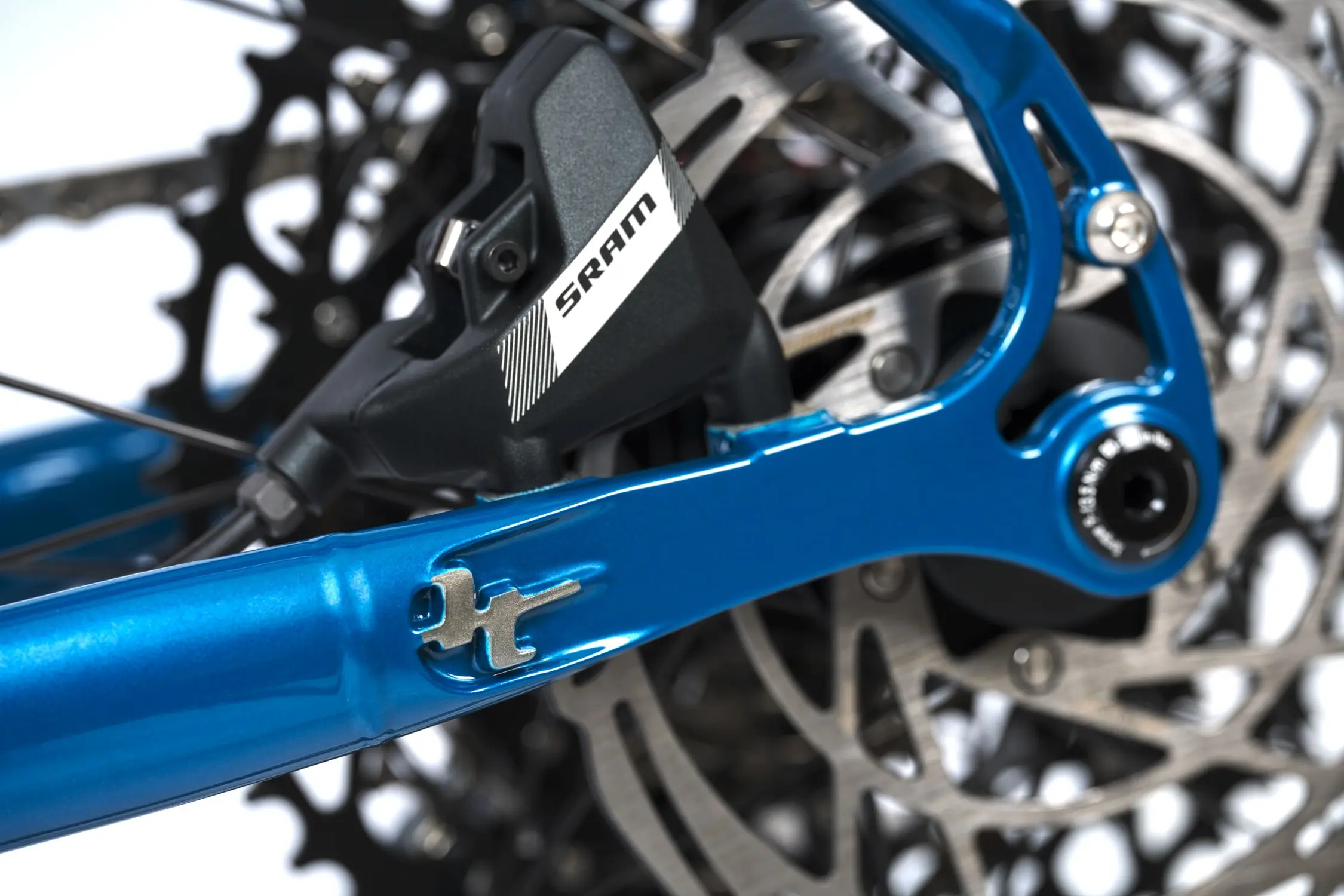
Hydraulic disc brakes are now considered mature and reliable systems. In everyday use, they require very little attention. Nevertheless, it is worth checking the braking system regularly and following the manufacturer’s maintenance recommendations. This helps ensure that braking performance remains consistently high.
The most important wear components are the brake pads. Since they wear down with every braking action, they should be checked regularly and replaced in good time. This helps maintain braking performance while also protecting the brake disc from unnecessary wear.
Brake discs are also subject to natural wear. For this reason, manufacturers specify a minimum thickness. If this limit is exceeded—or if the brake disc shows significant damage or deformation—it should be replaced.
It is also worth taking a quick look at the brake lines and connections. They should be clean, dry, and free from damage. Any damp or wet areas may indicate a leak and should be checked before the next ride.
When does a hydraulic brake need to be bled?
Under normal riding conditions, bleeding is only rarely necessary. Brake systems using DOT brake fluid should be serviced regularly in accordance with the manufacturer’s maintenance specifications. The reason: DOT brake fluid absorbs moisture over time. This changes its properties and makes it necessary to replace the brake fluid.
Brake systems using mineral oil generally require longer service intervals. Regardless of the hydraulic fluid used, however, the rule is clear: if the brake system has been opened or there is air in the system, the brakes must subsequently be bled properly.
Today, hydraulic disc brakes can also be serviced and repaired almost anywhere in the world. Spare parts, service tools, and qualified workshops are now available in most regions — a significant difference compared with the early days of disc brakes.
With regular inspection of wear components and servicing in accordance with the manufacturer’s specifications, a hydraulic disc brake can reliably accompany you for many years. That way, you can focus on what really matters while you’re out there: your adventure.