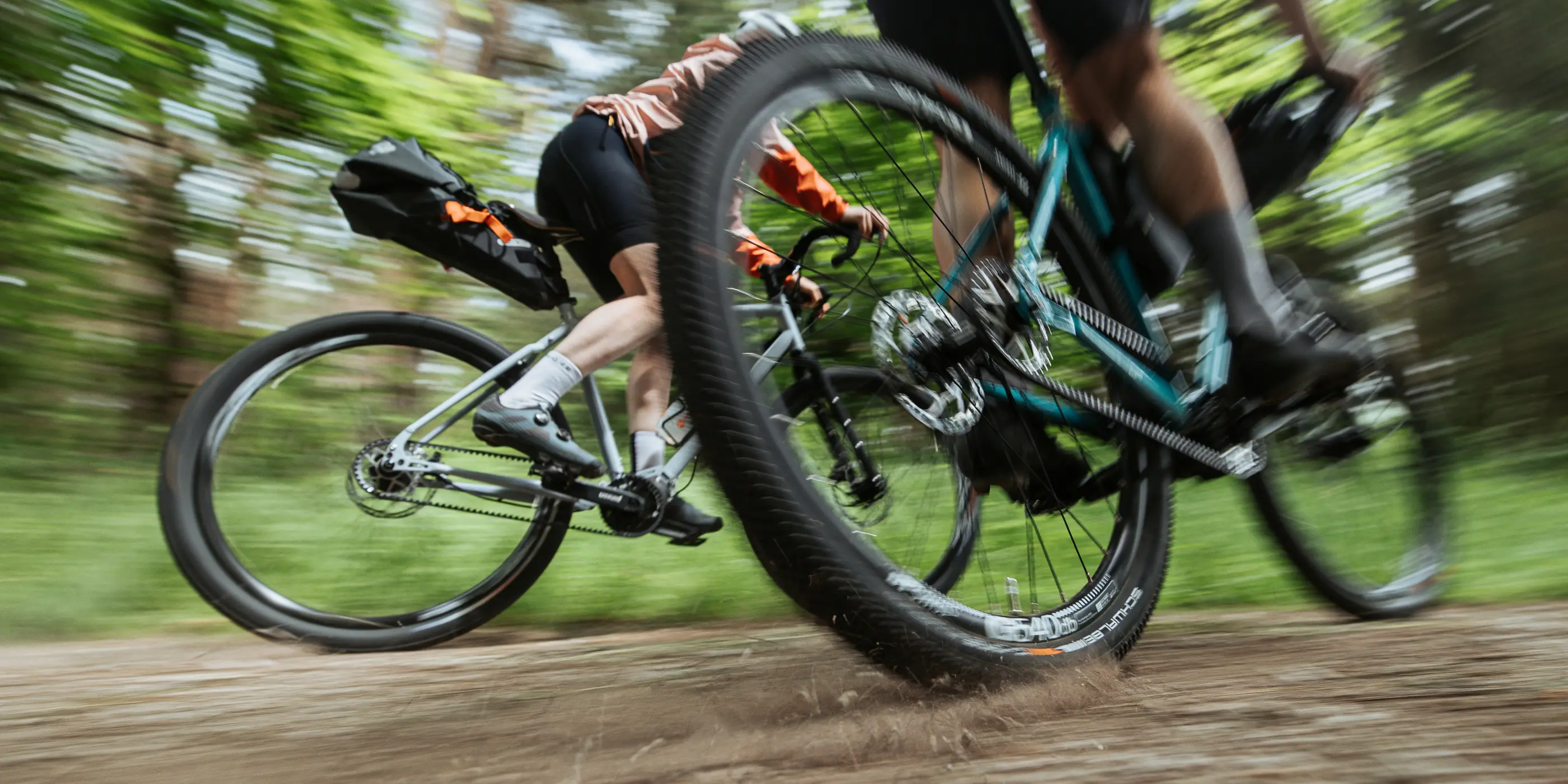
TECH BLOG [6] Light Is About More Than Brightness
The sun disappears behind the mountains, the forest grows darker, and you still have a few kilometres to go. That is when you really notice what good bicycle lighting can do. The first time you ride with a high-quality bike light, it quickly becomes clear that brightness alone does not make the difference. How the light illuminates the path ahead matters just as much.
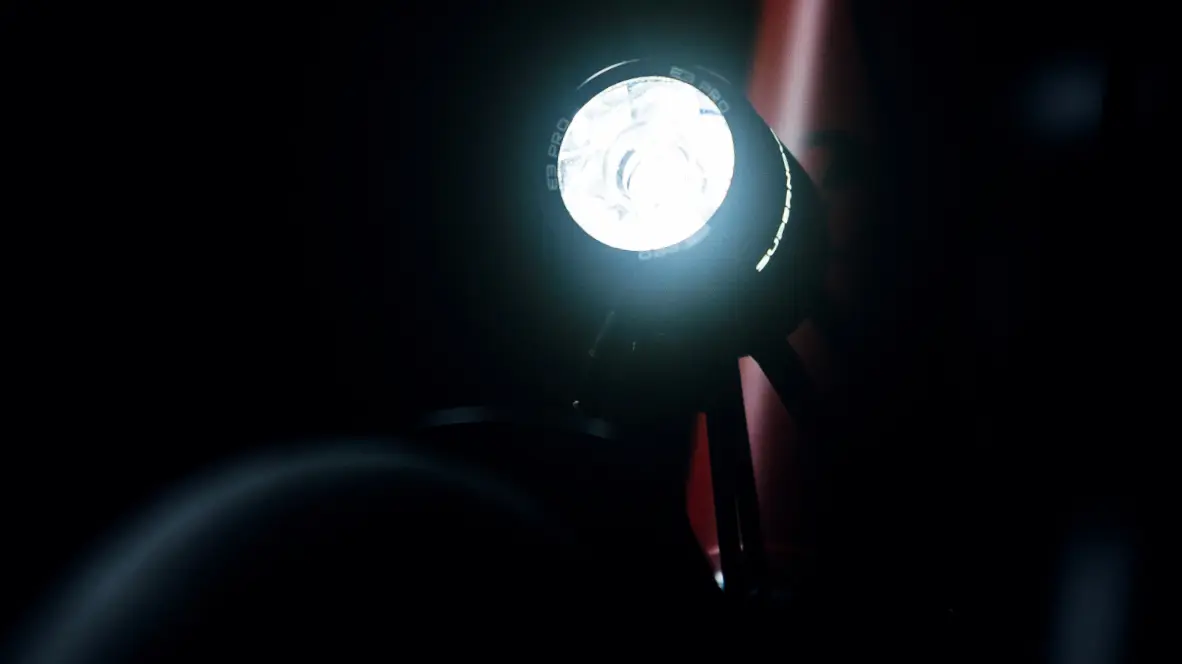
Basic lights often produce a bright spot on the ground. Better lighting systems illuminate the route more evenly, making the area immediately in front of the front wheel just as visible as the road or trail further ahead. A well-shaped beam also helps keep glare to a minimum for oncoming traffic.
You notice the difference especially on an adventure bike. On asphalt, it is easier to read bends in the road. On gravel, loose stones and ruts become visible sooner, while roots and other obstacles on forest trails are easier to spot in time. Seeing the surface early gives you more time to react and helps you ride with greater confidence.
Lighting has another job, too: making sure other road users can see you in good time. This is particularly important at dusk, in the rain and when light conditions change.
What to Look for in a Good Bike Light
When buying a bike light, people often look at the specifications first: 100 lux, 1,000 lumens or more. These figures only tell you so much about how well a light actually illuminates the route.
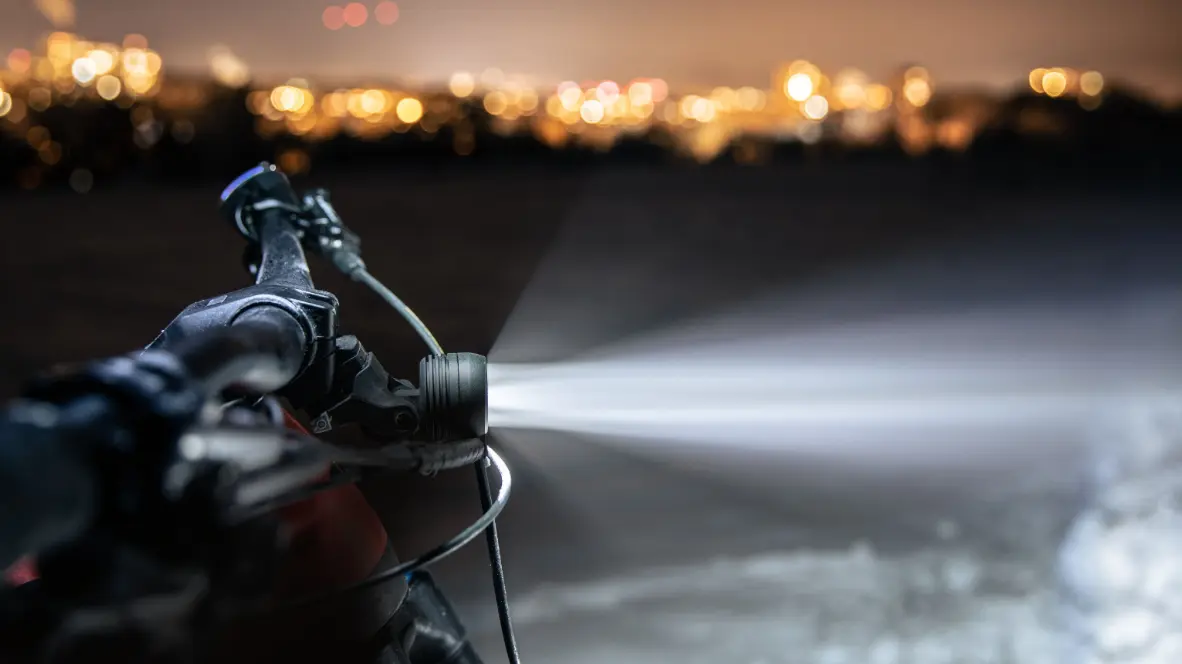
What matters more is the beam pattern, meaning how the light is distributed across the road or trail. You should be able to see the area directly in front of the bike as well as the route further ahead. A wide beam makes it easier to spot bends, junctions and obstacles at the side of the path.
The cut-off line is also important. It marks the transition between the illuminated area and the darkness above it. This directs the light towards the road while keeping as much light as possible from spilling upwards. The result is a clear view of the route without unnecessarily dazzling other road users. This principle comes from automotive lighting and is now one of the key features of high-quality bike lights.
A light’s performance often depends less on the LEDs themselves than on its optics. Reflectors and lens systems determine how efficiently the light is used and how evenly it is distributed. That is why two lights with similar specifications can look very different out on the road.
A carefully designed light can be more comfortable to ride with than a model with higher lux or lumen figures. What matters is how effectively the available light is used.
Lux or Lumens? What the Figures Really Mean
Lux and lumens are often confused when it comes to bicycle lighting. They describe different things, and neither figure alone is enough to judge the quality of a light.
Lumens indicate the total amount of light a light source produces. The figure describes the overall light output of an LED, regardless of where the light is directed.
Lux, on the other hand, measures illuminance on a particular surface. For bike lights, it indicates how intensely the road is illuminated at a defined measuring point. The measurement is taken under specified test conditions. It is useful when comparing similar lights, but it cannot tell you everything about how a light will feel to ride with.
Two lights with similar lux ratings can perform quite differently on the road. One may concentrate its beam to create a particularly bright area in the distance. Another may spread the light more evenly across the route. Its peak reading may be lower, but the beam pattern can provide a better overall view and make riding easier.
That is why reflectors and lens systems matter alongside the LEDs in high-quality lighting systems. They direct the light and distribute it as evenly as possible across the road. The interaction between the light source and the optics determines how easily you can make out bends, obstacles and changes in the surface.
Colour Temperature: Why Light Looks Different
Colour temperature also affects how we perceive light. Measured in kelvin (K), it describes whether light appears warm white, neutral white or cool white.
Cool white light often looks more contrasty and can initially seem brighter. Many riders find neutral white light more comfortable on gravel, forest trails and in changing light conditions. Colours look more natural, and surface details can be easier to pick out. Which colour temperature you prefer also comes down to personal taste.
For the overall quality of a bike light, however, colour temperature matters less than the interaction between light output, optics and beam pattern. When these elements are well balanced, the surface is illuminated evenly and puts less strain on your eyes. You notice the difference after many hours in the saddle.
That raises another question: where does the power for good lighting come from? These days, you often no longer have to choose between a battery and a hub dynamo.
Battery or Dynamo?
For a long time, there were two main options for bicycle lighting: a battery-powered light or a permanently installed dynamo system. Both have their advantages and suit different types of riding.
Battery lights are flexible. They are quick to mount, can be moved between bikes and can also be used away from the bike. That makes them a practical choice for sporty rides or bikes without a permanently installed lighting system.
A hub dynamo works differently. It generates electricity as you ride, powering the lights without relying on battery charge or access to a socket. This is useful on long rides and multi-day trips. As long as the front wheel is turning, it generates power.
On adventure rides and bikepacking trips, you no longer have to choose one system over the other. Modern charging solutions bring their advantages together.
The Best of Both Worlds
A hub dynamo can do more than power your lights. With a suitable charging system, the electricity it generates can also be used to charge external devices, such as a GPS unit, smartphone or rechargeable light.
One example is the combination of the Tout Terrain Plug and the Supernova Airstream. As you ride, the hub dynamo generates electricity. The Plug uses it to charge the Airstream’s battery, even while the light is switched on. This depends on your riding speed and the power available from the dynamo.
The two systems complement each other. The light’s battery charges while you ride during the day. At your destination, you can quickly remove the light from the bike and use it as a portable light source, for example when cooking, setting up camp or making small repairs.
The next morning, you can put it back on the handlebars and charge it again on the move. You do not necessarily need a power socket.
This combination is particularly practical on multi-day trips. The hub dynamo supplies power while you ride, while the battery light can be used flexibly away from the bike. Each system takes care of a different task.
Power from Your Own Effort: Why Hub Dynamos Still Make Sense
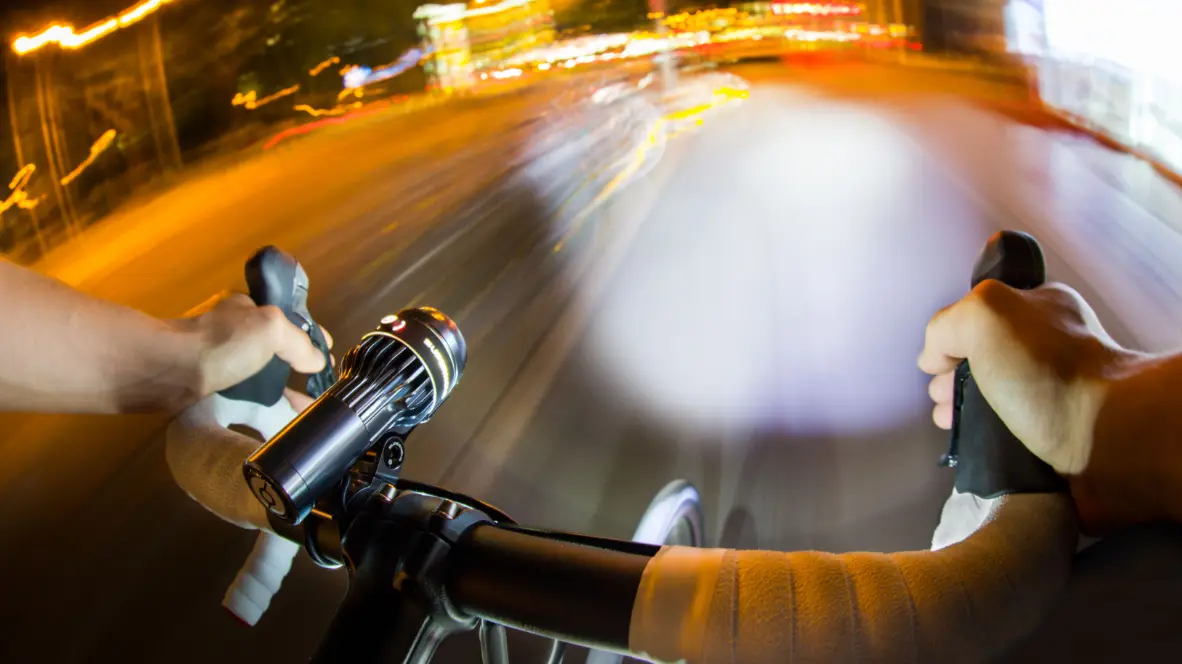
The hub dynamo is a reliable source of power for a bike. It does not need to be charged and works independently of sockets and chargers. As long as the front wheel is turning, it supplies power to the lights and, when paired with a charging system, to other devices as well.
The principle is simple and well established. Inside the hub dynamo, permanent magnets rotate past stationary coils. This changes the magnetic flux through the coils, generating an electrical voltage through electromagnetic induction. In Europe, hub dynamos are standardised to deliver 6 volts of AC at a rated output of 3 watts.
Many riders assume that a hub dynamo makes pedalling noticeably harder. Modern models are efficient, though. With the lights switched off, their additional rolling resistance is barely noticeable. Even when powering lights or other devices, the extra effort required remains low and is usually a minor factor in everyday riding.
Hub dynamos really come into their own when reliability matters more than maximum flexibility. On long journeys, multi-day bikepacking trips or everyday rides, they provide a continuous supply of energy. There is no need to charge batteries or carry spares. Anyone spending several days on the road will appreciate that independence.
The main differences between hub dynamos lie in their build quality, efficiency and long-term reliability. High-quality models run smoothly, are protected against the elements and need virtually no maintenance over many years.
SON hub dynamos are among these products and have earned a good reputation, particularly among touring cyclists. Their precise construction, low rolling resistance and durability are key reasons why. These qualities matter most when the nearest workshop is many kilometres away.
The hub dynamo provides the foundation for the power supply. How reliably that power is used also depends on the wiring, connectors and electronics. These carry the generated electricity to the front light, rear light or other devices and prepare it for use.
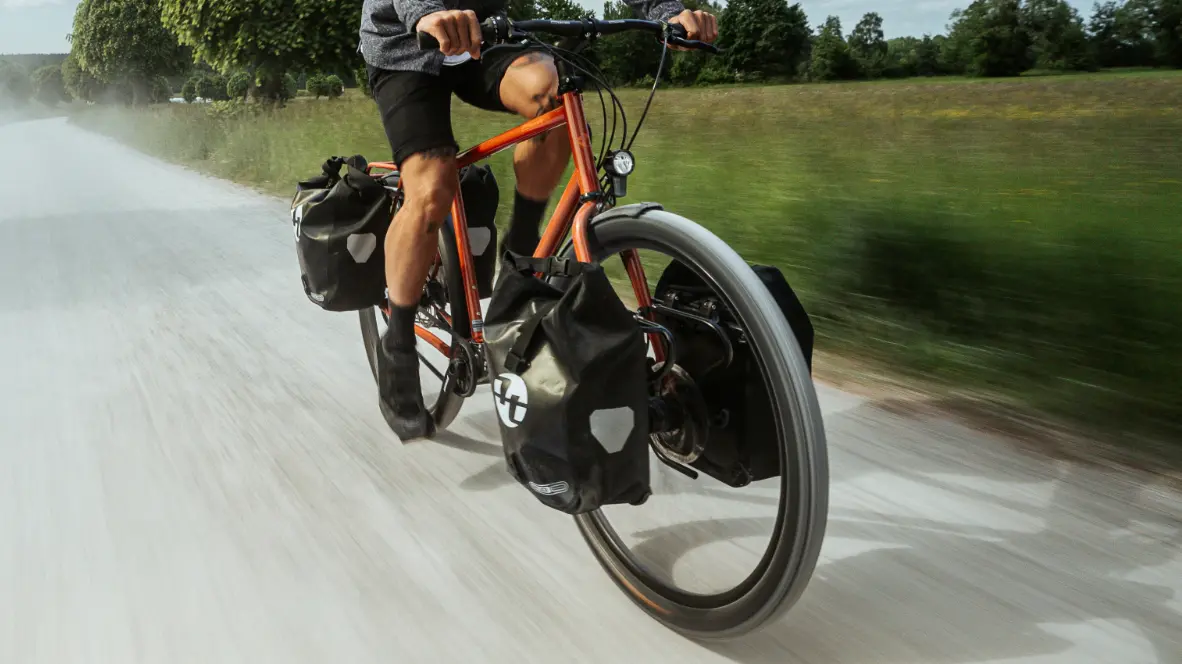
When braking, weight shifts forward, placing more load on the front wheel and allowing it to transmit significantly greater braking forces. At the same time, the rear wheel becomes unloaded and reaches its traction limit sooner.
This is why the front brake provides most of the deceleration. The rear brake helps stabilize the bike and supports the braA reliable lighting system needs more than a good headlight or a high-quality hub dynamo. What matters is how all the components work together.
On adventure and touring bikes, lighting systems are often exposed to demanding conditions. Rain, dust, dirt, vibration and changes in temperature are part of many trips. Transporting the bike, removing the wheel or making repairs on the road can put the system to the test, too. All the components need to work reliably together.
That includes carefully planned cable routing. Neatly routed cables are better protected from damage, are less likely to catch on luggage or branches, and make maintenance easier. You often only realise how important this is after thousands of kilometres.
Connectors have to withstand a lot, too. They need to protect the electrical contacts from moisture and dirt over the long term, while still allowing, for example, the front wheel to be removed quickly for transport or repairs. Keeping contact resistance low helps ensure that the power generated by the hub dynamo reaches the devices with minimal loss, even in difficult conditions.
At Tout Terrain, we see lighting as part of the bike as a whole. From the development stage, we make sure that the lights, power supply, cable routing and connectors are designed to work together. This creates a clean, uncluttered look and helps keep the system reliable over time, wherever the journey leads.
In everyday use, good integration often goes unnoticed. That is precisely the point: the system works in the background without demanding your attention.king process. For controlled braking, both brakes should always be used together. How much braking force can be applied to the front and rear wheels depends on the surface, speed, and load carried by the bike.
High Beam, Daytime Running Light and Standlight: Useful Features
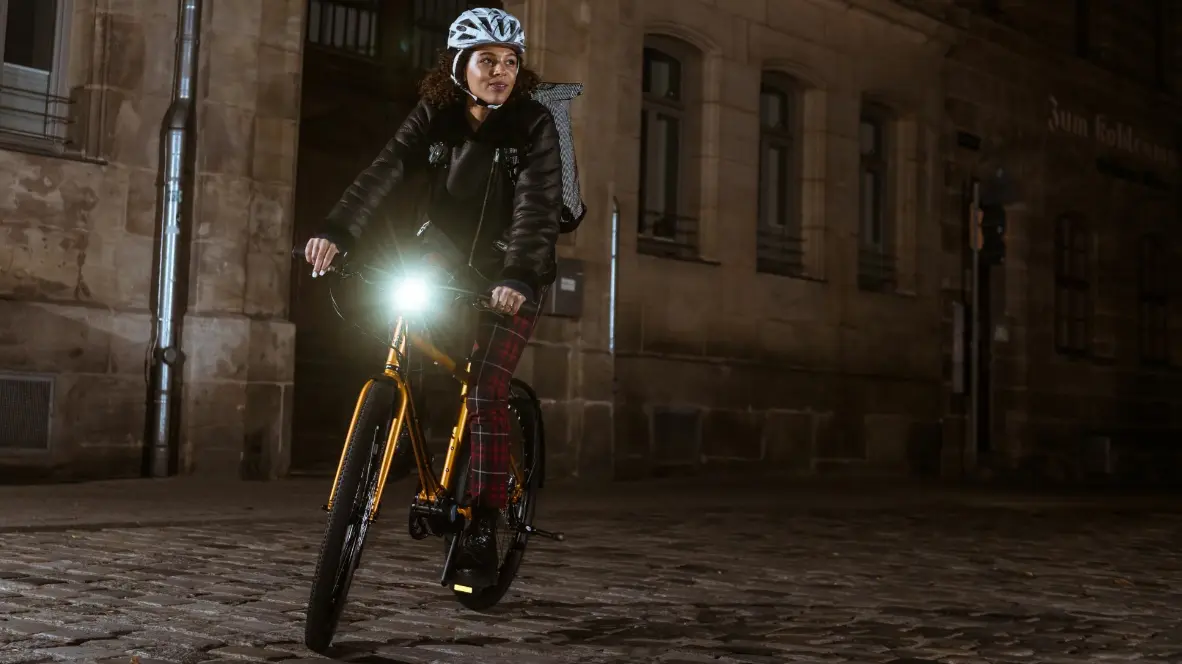
Modern bike lights can do more than illuminate the path ahead. Some features that were once mainly associated with cars are now common on bicycles, too. What matters is how useful they are in everyday riding.
High Beam: A Better View on Dark Routes
Anyone riding after sunset on unlit roads, gravel tracks or forest trails will know the problem: dipped beam illuminates the area directly in front of the bike, but the route further ahead often remains dark.
High beam extends the illuminated area, making it easier to spot bends, bumps and obstacles sooner. This gives you more time to react, especially on fast descents or unfamiliar routes.
As when driving a car, high beam should not dazzle other road users. When there is oncoming traffic, or when other cyclists or pedestrians approach, you need to switch back to dipped beam.
Daytime Running Light: Be Seen in Daylight
Lighting can improve safety during the day, too. It helps other road users notice your bike sooner.
When the sun is low, light conditions change in the forest or rain clouds darken the day, daytime running lights can make you more visible. Their purpose is not to illuminate the route, but to draw other road users’ attention to you.
That is why many high-quality lighting systems include specially designed daytime running light functions.
Standlight: Stay Visible When You Stop
At a junction, at a traffic light or during a quick photo stop, the bike comes to a standstill and the hub dynamo stops generating electricity. Modern headlights and rear lights address this with an integrated standlight function.
A small energy store keeps the lights running for a few minutes after you stop. That way, you remain visible even when the bike is stationary.
This comes in handy on longer rides, whether you are waiting at a traffic light or taking a short break by the roadside. The bike stays lit even though the hub dynamo is no longer generating power.
None of these features is decisive on its own. Together, they help adapt the lighting to different riding situations. Good lighting systems support you when you need them, without constantly demanding your attention.
Low Maintenance: What Matters
Good bike lighting should work without constantly demanding your attention. That is especially welcome on long journeys. Instead of worrying about battery charge, spare parts or regular maintenance, you can focus on riding.
No lighting system is completely maintenance-free, though. Before a longer trip, it is worth giving the main components a quick check.
The light’s lens should be clean so that the route continues to be illuminated evenly. Cables and connectors should also be checked from time to time. They need to be secure, neatly routed and free from visible damage.
With battery-powered lights, taking proper care of the battery helps extend its service life. If the bike will not be used for a long period, store the battery according to the manufacturer’s instructions.
A well-designed dynamo lighting system, by contrast, needs little attention. The hub dynamo does not depend on charging cycles and supplies power reliably whenever the bike is moving. This independence has made it a preferred choice for many touring cyclists for decades.
You find out how good a lighting system is when you are out on the road and it keeps working reliably.
When the sun disappears behind the mountains, the forest grows darker and you still have a few kilometres to go, good lighting gives you orientation and confidence. It is not about shining as brightly as possible. It is about seeing the route ahead clearly and being able to keep riding when the day has long since ended for everyone else.